Friday, October 2, 2009

A Weekend in Maine

Yo and Mo rejoined forces for a long weekend last week; Yo visited Mo in her fancy digs at the JIAAW, and then they traveled up the coast toward Maine. We had never been to New Hampshire or Maine before, and the weather couldn't have been more inviting. With beautiful weather, a red rental car and lobsters waiting, we left for Maine on Friday.


Coastal New Hampshire was beautiful, and I think neither of us realized that NH had such beautiful beaches. Here we stopped to enjoy the sun and surf.


We had to turn around at one point, deciding that we should have stopped at Petey's Lobster Shack when we had the chance. We were not disappointed. Here's Mo with her double soft shell lobster platter (which Yo ate half of, along with his own lunch!).


Not quite sure what to do with TWO huge lobsters. Mo was fine with eating the lobster until it came to the green stuff and then she gave up.

After we did our part in contributing to the depletion of oceanic protein, we continued up the coast to southern Maine. After a pleasant evening with our hosts C and C, and a fine sleep, we all went for a long walk on the beach the next morning, collecting sand dollars, sea glass and chasing H. around. Here we all are on the beach.


We spent part of Saturday exploring Portland, but Mo left the camera in the car so there are no images of that adventure. Nor are there any images of Yo's adventure with some bad scallops, but you wouldn't want any images of that . . .

Sadly, we did have to leave on Sunday, but since it started raining then anyway, it was time.

Friday, August 21, 2009

Travel Advisory . . .


Usually we don't have great excuses for our long silences in the blogosphere, but this week we actually do. In the next week we will move 4 times, in 3 different countries, so we won't be posting. After packing up our excavation and ourselves after three months away we leave Tel Aviv tomorrow morning at 5:30am. We arrive back in Toronto around 1:00pm and will hopefully be picked up by our amazingly kind family (LL, MRK and BDL) where we will be whisked off to the anthropology department at U Toronto, so we can pack up Mo's office. On Monday we'll pack up our car (assuming it still works. . .) and drive from Ingersoll to Chicago, where we will begin packing up our apartment. Our landlady, after sprucing the place up, sold it in July and we have to be out by September 1. On Wednesday we'll pick up the Uhaul and move across Hyde Park to another condo. Thursday and Friday will be unpacking and shipping boxes to Providence in advance of Mo's move to Brown the following Tuesday. Then we will collapse, oh sorry start teaching a class and get back into the work a day world in the lives of archaeologists. The entire time we are sure to be wishing that we were in the field, except maybe Jordan where the memory of no running water, electricity, cellphone reception and the flies still looms large. We'll be back in touch in September.

And just in case you were wondering, the monkey is still with us and has been a great help in Turkey, Jordan, the PA and Israel. More monkey tales to come . . .

Sunday, August 16, 2009

Marj Rabba: End of Season Highlights

After five weeks of living in double-wide trailers, the small team working at Marj Rabba dispersed, some to continue work on the excavated material back in Jerusalem, some back to North America, some back to their homes in Sakhnin. Only a small area was exposed, but we consider it a very successful season. Although we are very excited about the walls, architectural features and finds, we will try to rein in our enthusiasm over dirt and rocks and stick to the highlights.


Marj Rabba in December, 2008

First, we were confronted with a field that looked very different from the lush green grass when we visited the site back in December. That was then. When we returned in July, we were confronted with thistles and weeds, taller than Yo or Mo in places. Bad conditions for laying out squares. The solution? Cows and goats! They did an admirable job, those hungry quadrapeds, but they don't exactly rush, so we also resorted to a weedeater. That, however, lasted only a little more than an hour before it was kaput.

With our squares laid out in two areas (west is the large rock pile, east is the field), we discovered walls and other architecture in all three squares of the east section (where the tall grass was). The remains of the stone walls indicate well-built walls, and the other stone features were inside, presumably inside a room. In the photo below, you can make out the wall running acroos the top of the picture; on the right side is a curvilinear structure that presumably continues into the unexcavated area on the right (east). We aren't sure what the curving structure is, but its intriguing and we're looking forward to complete excavations in that area next year.


In the square to the west, still inside of the room, this intriguing structure initially looked like this:


But once we finished excavating the interior, it turned out to be a well built stone pit, perhaps a silo. Here, it is in the top of the picture below, built up against the bedrock, just below the wall (and near the corner of the two walls).

Here's a close-up view.


Sometimes when you need shadow for photography, you can just line up some archaeologists to get the job done.

Other times, you might have to bribe them with suckers!


Of course it isn't all architecture. We found buckets of pottery, flint debris and tools, and well-preserved animal bone. Here is a photo of some possible "Hula ware" pottery, with the tell-tale wave incisions; whether or not this pottery really comes from the Hula valley, or merely is a style, is something we must determine. We even found things we didn't expect! No, those aren't Mentos.


SNAKE EGGS! Yumm. (Okay, maybe lizard eggs.....)


Over in the west area, things were much more difficult. We wanted to try to understand why these piles of rocks were left there, and when. We started by placing a trench across the wall that was visible on top of the pile of rocks.

Mo and students SS and BJ debating how to tackle the west rock pile. The trench was about 2 meters by 10 meters, cutting across the rock pile east-west, and thus both sides of the wall.

This was hard work, digging through rocks. About 5% was sediment, the rest was small to medium sized limestone rocks, placed there by people for reasons we hoped to determine. However, there were very few artifacts: some Chalcolithic sherds and flints, and a few late Roman or Byzantine sherds. Either could easily work there way down between the rocks over millennia. In the end, our beautiful trench exposed bedrock below the well built wall, but remain unsure what to make of the wall, or the pile of rocks. Visiting archaeologists ranged in opinion; one was sure in his gut that its Chalcolithic (we liked to hear this!), but others believed that it must be much later. Yet there is almost nothing later to date the structures.

Below, this is Trench one, looking to the west; the wall is at the top, and bedrock is what the scale and north arrow are resting on.


The other side of the trench looked similar - mostly rock, and not many clues as to how it came to be there or why.

Finally, at the end of the season, we needed to try to protect both the site as well as any visitors (cow, person or goat). We sandbagged most exposed features.

Then, we covered the excavate areas with plastic, sediment and rocks.

Finally, we bought fencing to keep animals and people out, primarily so that they wouldn't hurt themselves if they didn't notice the excavated squares.

We even bought a sign for our fencing. We fully expect that only the sign will remain by next year....

Then we had to find someone to move the container back to Jerusalem. Look at this strong guy, almost independently putting the two ton container on the back of the truck -- and in white pants too!


Thanks to the "because we're professionals" of Marj Rabba for so much hard work, early mornings and boiled eggs.

Wednesday, August 12, 2009

Finishing the season


Typically, closing down excavations at the end of season can be terribly hectic and even chaotic. The end of our season went was not nearly so frenetic as some, but then, we are a small excavation with great students and volunteers. Still, we have been very busy chasing after a truck with our shipping container, closing the excavation areas, and re-organizing ourselves in Jerusalem.

We will return with more photos and stories soon!

Friday, July 17, 2009

Where to Dig??

We pick a place to dig based on survey, landscape and any information we have been given by local landowners, shepherds and archaeologists. In this area our colleague DS (Northern Chalcolithic expert) had identified the site as part of a survey in this region. Once we have the field cleared (by goats or modern machine - see previous post) we lay a grid and then start to dig. This is the early stage of square L1:
In addition to the students we have three workmen from the nearby village of Sahknin. They have been working in L1 and so has Mo. We speak a mixture of Arabic, Hebrew and English in the square and usually we can come to an understanding, although Mo is not always sure what it is. Last week had a conversation about one of the guys getting married: either he was getting married or meeting with a Russian prostitute, turns out he did actually get married.
During the course of day we collect up all of the pottery (broken pieces of pots) and flint and basalt and take it back to where we are living to "process" - that means we wash, record and sort all of the finds. Below is a bucket of pottery ready to go back to the lab.
In order to entice people to pottery wash, which actually isn't that much fun, we put out coffee and tea. Not that the coffee is that great - Elite - a famous Israeli brand that I think only our pals J and M enjoy.
Here we are bagging up the dry pottery from the pervious day. Sometimes there are some interesting nuggets in the very dirty pottery - painted decoration, incisions and appliques. At times it is a bit like a treasure hunt, but mostly it is just a tedious part of the life of an archaeologist. Pottery washing is a good time to sit around and talk about the days events, or how we are going to proceed the next day and how we could improve on aspects of the recording system or excavating methodology. We try to be as inclusive as possible and ask for and encourage input from the students (both positive and negative). Sometimes we just argue about the merits of Harry Potter - preparing one of the students (AB) for her year in Cambridge. Or we just discuss the differences between Americans and Canadians, apparently there are many.
We have had a great couple of weeks. Everyone cheerfully carries out their assigned tasks. Last night we had movie night with popcorn and everyone crowded around Yo's laptop. We watched Star Wars (movie #4) but it was missing the final crucial Death Star scene - not sure it mattered since we had been playing a Star Wars drinking game . . . More adventures soon.

Marj Rabba Weeks 1 and 2

We have been remiss in reporting on the results of the first two weeks of our field season at Marj Rabba. We know there are 100s of diligent readers who are longing for an update, we apologize. We have had a great beginning of the season, finding walls, pottery, flint and basalt (which makes Yo very happy!). In case you need a reminder of what we are doing and why here's the low down.


By launching excavations in the Galilee, at large and small settlement sites (including Marj Rabba), specialized sites and caves, we hope to answer a variety of questions concerning the Chalcolithic period in northern Israel:

· What is the nature of Chalcolithic material culture in the Galilee? What are its hallmarks? How similar is it to the material culture in the Golan and in Lebanon, or the sites in the Negev and Jordan? Is it unique?

· What connection does the Galilean Chalcolithic share with tangent regions (Golan, coastal plain, Jordan Valley) and with places farther afield (Sinai, Egypt, Syria, Lebanon or Turkey)?

· What were the foundations of Galilean Chalcolithic subsistence and economy?


We are a small team of 8 people - Yo and Mo, 2 students from the University of Chicago, 2 from the University of Toronto (yeah! there is a big US vs. Canada rivalry at the moment), a PhD student from the University of Connecticut and one student from the University of Washington at St. Louis (she and Mo worked together in Turkey at the beginning of the summer, more on that later).


So before we could start we needed some help with weed/thistle clearance. We hired a local kibbutznik (young guy who had just returned from "finding himself" in Spain), with a weed whacker. But he was defeated by the stones, weeds and thistles. So we asked the local shepherd to bring his goats and cows through the site, which worked wonders. Of course they also left a lot of "special" presents.

We also needed to comply with some of the landowner requirements, so we rented a port-o-potty for the season. Here is Yo and the delivery guy setting up the site bathroom!

We also needed somewhere to store our tools and finds on site that we could then transport to Jerusalem for the post-excavation analysis. Here is our container being delivered to the site.

Goat herd eating weeds, you can just see Ali, the shepherd off to the far left.

Cows passing through the site, as we discuss where to place the container. Okay Mo is having some issues with uploading images, so more in a minute.

Wednesday, July 8, 2009

Michael Homan was right!

Our good friend Michael Homan after seeing our post about Yo's new position at the OI stated "Mo and Yo in the same city, let alone the same state and/or country was too good to be true". He was right. Last month Mo was offered a one year post doctoral fellowship at the Joukowsky Institute for Archaeology in the Ancient World at Brown University 
(http://www.brown.edu/Departments/Joukowsky_Institute/). For many of our non-American readers Brown University is in Providence, which is in the state of Rhode island - about an hour drive from Boston. 

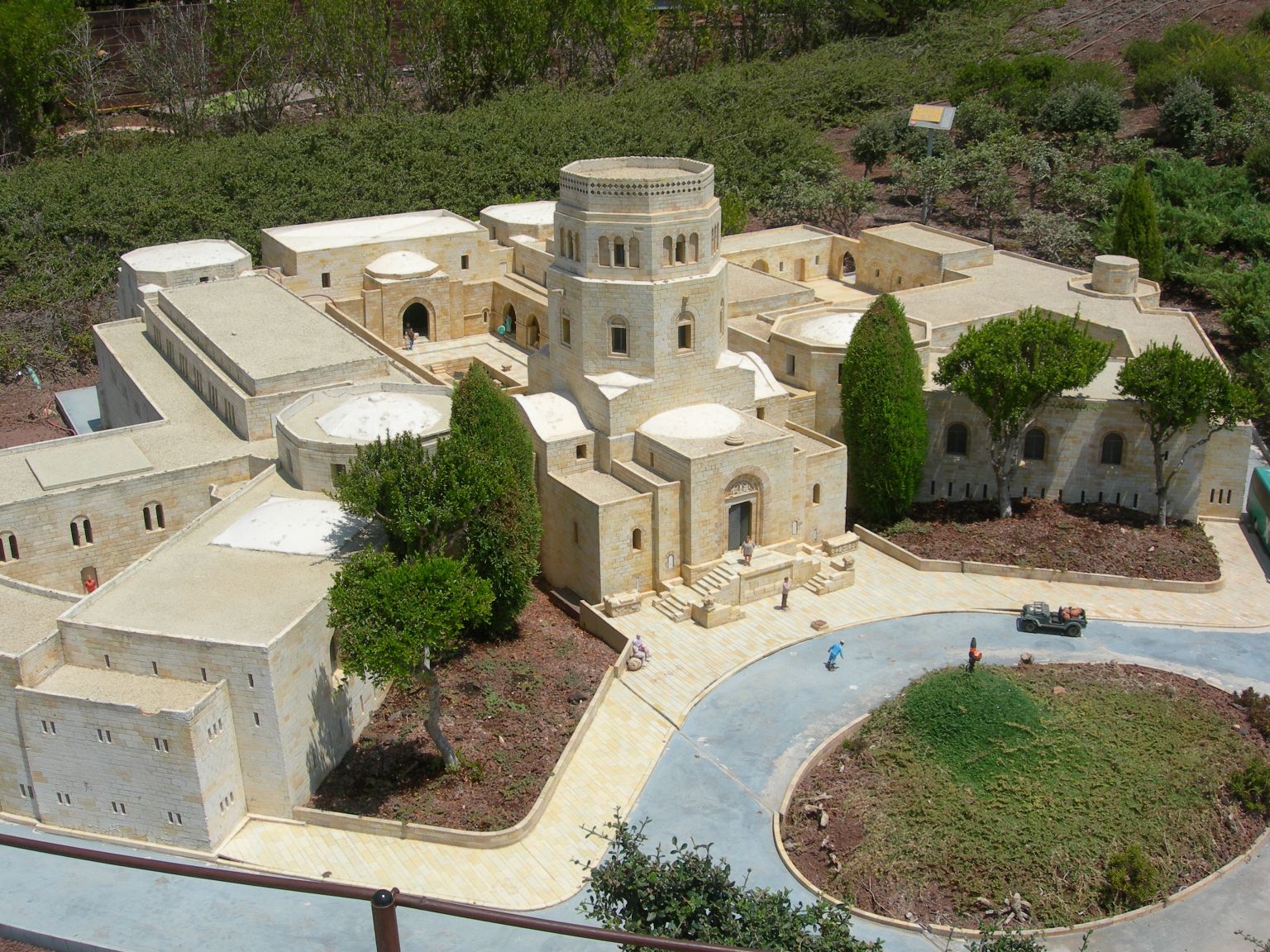
This is an image of the new home of the Joukowsky Institute
Mo will be teaching a class on museums and policy in the fall and a class on Middle East Prehistory in the spring - good thing Yo is an an expert in the prehistory of the Middle East and Mo has at least studied prehistory and works in the Middle East! We have checked into flight schedules and Southwest flies direct from Chicago to Providence, so once again we will be a commuter marriage. Come visit either Chicago or Providence!!  

Saturday, June 27, 2009

One more reason not to sleep on the ground....

In mid-June, Mo arrived in Amman from her fieldwork in Turkey; Yo, cleaned up after 11 days living in a tent at Wisad Pools without bathing, met her at the airport. The next day, after a quick visit to ACOR to re-fill water cans and shopping to replenish supplies, we headed out to Wisad to rejoin the other two team members.

We will blog more on that in the near future, and hopefully Mo will upload some images from Turkey and talk about the survey there.

But while you wait, we thought we'd post this short video clip of an unexpected visitor in our camp at Wisad. If you can identify the species, we'd appreciate it. We are guessing perhaps a horned desert viper, although it doesn't seem to have the horns; a sand viper seems unlikely as this one was out in the heat of the day (twice).
video

Tuesday, June 2, 2009

Me and my monkey

Over a week ago, Yo and Mo worked on lodgings for the upcoming dig season. After a nice visit to Shorashim, we then drove towards the Sheikh Hussein bridge at Bet Shan, where Mo would be crossing for her flight from Amman to Istanbul. On the way, we stopped to visit Nazareth, a place neither of us had been before. We didn't really know where to go, but finding some of the major churches wasn't that difficult. We visited the Basilica of the Annunciation, a modern Catholic church built on the remains of Crusader and Byzantine churches. The interior is unusual, but its coolness was welcome. The little tyrant with a badge literally yelling at tourists and clapping his hands as if shooing swine flu ridden pigeons was not so welcome. (making more noise than the tourists!).

Of course, Yo is just bitter because he was just starting to drowse after not sleeping one wink the previous night!

The monkey generously given to Uncle Yo by niece L, was thirsty so we had a Coke, and a coffee. Then we took Mo to the border for her adventure, getting to the Amman airport and onward to Turkey.


Saturday, May 30, 2009

Prehistory in Jordan, the Paleolithic, and the Biggly Wiggly

A recent conference organized by the Department of Antiquities of Jordan, the Council for British Research in the Levant, the American Schools of Oriental Research and the German Protestant Institute recently ended. The conference included one day of site visits, and two days of research presentations, many presented by the leading specialists of Jordanian prehistory, and their students.
A contingent of prehistoric archaeologists who work in the environs of Azraq had thought that with all of these archaeologists in one place at the same time, site visits would be a good idea so that different projects could compare the results of excavation, both current and older. This was an auspicious year, as there are several active projects in the field near Azraq, as well as some senior archaeologists who had worked in the Azraq wetlands before it was drained. (Until the mid-1980s, the Azraq wetlands was an extensive oasis with ample fish, animals and birdlife, including migratory species. In the mid-1980s, the growing population of Jordan needed additional water, and water from Azraq was pumped until virtually the entire swamp was dry, wiping out species). Traveling in convoy, we left Amman via the airport highway, stopping to get gas on the way out. In this particular strip mall is a Biggly Wiggly, playing on the Piggly Wiggly markets of the American South, which typically features a smiling pig. For those unfamiliar with pronunciation in this part of the world, the sound of "P" is very difficult for Arabic speakers, and is typically pronounced as a "B". The person who made this sign is well aware of this and clearly has a good sense of humor about it...

After filling our tanks, we head out to Wadi Jilat, where Andrew Garrard and a number of his students worked on Eplipaleolithic to Neolithic sites. As he joined us for this expedition, he lead the way out to find the Jilat sites, which only a few of the senior prehistorians among us had visited in the past. On the way out, our lead car went on ahead looking for a quarry for "Dabba marble", a greenish rock type popular during the Epipaleolithic for the creation of beads. In the picture below, you can barely see the vehicle searching for the Dabba marble area (which it seems we had already passed by this point).

We were following the soccer mom vehicle, an "SUV" type that really wasn't made for this type of travel; this was apparent when we had to stop and change the flat.


Finally we arrived to Wadi Jilat, where a series of sites were investigated and documented by Prof. Garrard and his team. The wadi is very nice, with some dramatic incising in places, with small canyons such as the one below.


These sites ranged from Epipaleolithic to early Neolithic, some very well preserved.


At one Epipaleolithic site (I've forgotten the number of this one), someone spotted an interesting shape in the wall of a looter's trench. And amazingly it turned out to be a beautiful example of a small Natufian footed basalt vessel, finely ground and with a carefully incised line around the rim exterior.

Dr. M. (Director of excavations at Kharaneh, showing off Epipaleolithic basalt 'chalice')

Unfortunately, even in such a remote area, where there are few antiquities worth much to a looter, bulldozers have done incredibly damage to some of the sites, such as this one. The damage to such fragile early sites is stunning when mechanical equipment is used.

Nevertheless, it was a beautiful day with a number of great sites and a fascinating tour. In addition to the prehistoric sites, there is a much later (Ottoman?) dam up the wadi with water, although murky and muddy.


Can you spot the toads? (I didn't realize I was taking the picture of two of them, until I downloaded the images later). We won't talk about what they are so happily floating in.....


DR. T, Associate Director of ACOR, the freshly minted PhD. Doesn't he look fresh and minty?

After these visits, we drove from Wadi Jilat to Kharaneh. There we had a quick lunch (much of it provided by Dr. B, via tasty leftovers from an ACOR reception a few days before!).
The "castle" is well known to tourists and archaeologists alike, but the incredibly rich Epipaleolithic site about one kilometer to the south of the Umayyad structure is not as well known. We were updated on the progress of the excavations (where we visited on this blog last year, see ......). The site is so rich that they on longer attempt to separate the cultural, botanical and faunal remains in the field, but back in their lab in Azraq. This is a massive undertaking, to separate all of the material caught in 4 mm and 2 mm screens!

The directors of excavations of Khareneh, DR. T. Richter and Dr. L. Maher, giving a site tour (Richter is second from left, Maher in blue next to him).

After we visited their excavations, we returned to Azraq, where we were treated to amazing hospitality by the dig team; an amazing array of grilled meat, hummus, salads, and most importantly, beer and EVEN mojitos by some very inspired dig team members. Karaoke of the Eagles and Meatloaf notwithstanding, it was a delightful evening.
The next day we visited on-going excavations at Druze Marsh, where the compaction and concretion is so hard that the excavators are using CROWBARS to break the matrix into hard lumps for "sieving" -- which is largely impossible. Below are their excavations of this Middle Paleolithic site, with a small team of experts led by Michael Bisson, April Nowell and Carlos Cordoba.


Above: C. Cordoba and A. Nowell give a detailed stratigraphic description of their excavations at Druze Marsh in "downtown" Azraq.
Finally, we visited additional excavations in the Azraq area, many of them conducted many years ago by senior leaders of prehistory. Unfortunately these are difficult to describe (by such mentally challenged later prehistorians such as Yo) and are not so photogenic. However, Prof. G. did point out this early ancestral spider exeskeleton near the excavations.

Our blog may be quiet for the next few weeks, as Yo heads out to Wisad Pools, and Mo has little internet access. Wish us luck in our endeavours, and we hope to return with new photos of ancestral species, stuffed monkey visitors and exciting sites of the Middle East.